Key takeaways
- PSA population is not a count of every card that exists worldwide.
- Read serial numbering, graded populations and listing counts separately.
- Consider both why the population is low and why you want to collect the card.
Open contents
Population counts PSA grading records
The Population Report groups cards handled by PSA by year, set, card and grade. Looking at the PSA 10 column means looking at the records graded PSA 10 under that specific classification.
It does not count every ungraded card or every card graded by another company. A low-pop description should not be expanded into a claim that only that many cards exist worldwide.
For a print run, identify the exact variation

Serial-numbered cards carry a designation for the edition and individual specimen. As an illustrative example, 12/99 means specimen 12 within a numbered variation of 99. It does not count all cards of that player or all colors together.
Parallels can differ in color or finish, and some have no serial numbering. Before interpreting a count, match the year, series, card number and official parallel name.
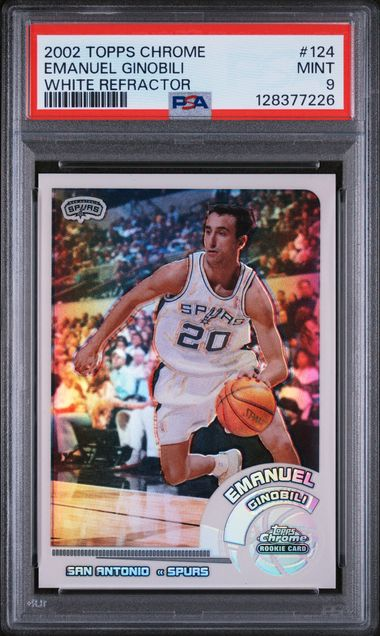
Keep Manu’s White Refractor separate from Base
The featured Manu Ginobili card is 2002 Topps Chrome #124 White Refractor, printed as Emanuel Ginobili. Although Base has the same card number, it is a separate condition.
This article does not newly measure the current population. The card is an example of how to identify the specifications and find the matching row in PSA’s records. A low-number claim in a listing title alone does not establish price or rarity.
Low population also reflects submission patterns
A population can be low because high grades are difficult to obtain, or because relatively few cards were submitted for grading in the first place. PSA also explains the need to consider submissions and variation classifications when reading these figures.
Even the share graded PSA 10 describes submitted cards. It does not give the probability that your own raw card will receive a 10. Avoid assuming there is only one reason for a low count; return to the card’s condition and supporting records.
- Does the row match the year, number and parallel?
- Are grade-specific counts kept separate from the total?
- Have you recorded the date you checked the report?
Few active listings do not promise the next sale
The number currently offered for sale describes the market at that moment. A low population or print run does not reveal how many people want to buy, the condition of available cards or when another will be listed. A small count alone is not a reliable forecast of future prices.
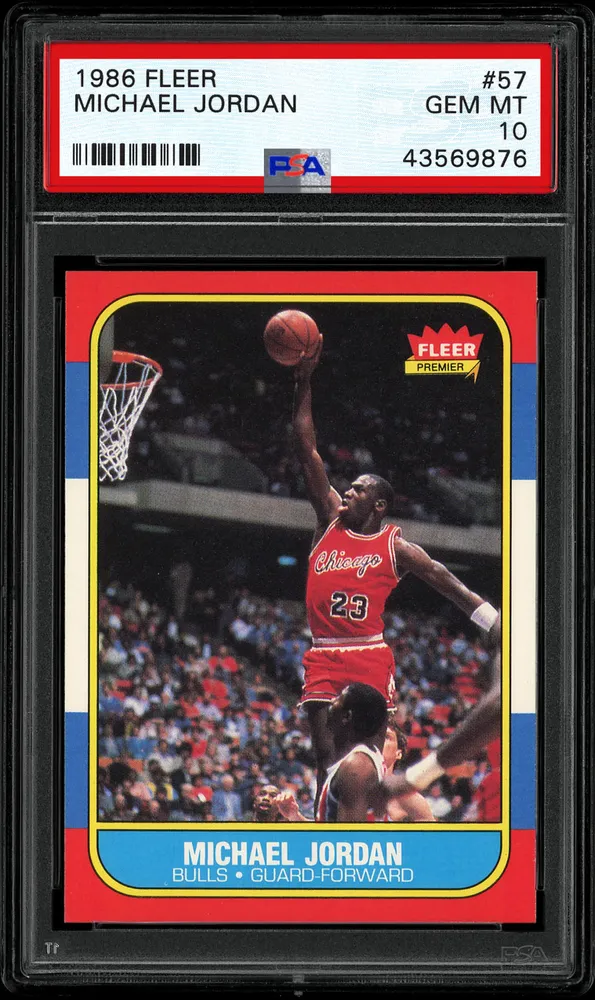
For 1986 Fleer Michael Jordan #57, you can read graded populations and actual sale records separately. Include the photograph, era, design and your own reasons for collecting the card alongside the price.