

Key takeaways
- Match the year, series and card number together.
- A parallel name and serial number describe different things.
- Even for graded cards, check the grading company, grade and actual photographs.
Open contents
Read the year and series together
Begin with the year and series in the product name. For example, 1996 Topps and 2003 Topps Chrome differ in their year and series, as well as in the players pictured.
Do not identify a release from its uniform photograph or reverse copyright year alone. Note the full product name and match it to the checklist. Search Topps and Topps Chrome separately.
Five parts of a card name
- Year
- 1996Year or season of the product
- Set
- ToppsManufacturer and product name
- Player name
- Kobe BryantThe player shown on the card
- Card number
- #138Number within the set
- Variation
- BaseBase card or parallel
Example: 1996 Topps Kobe Bryant #138 — Base
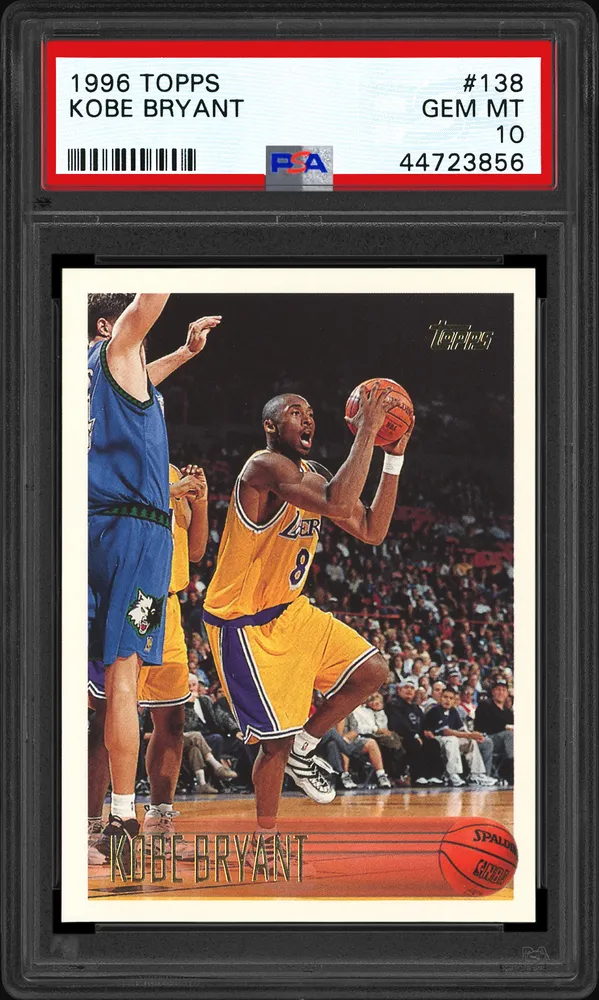
#138 / BaseView details & price history
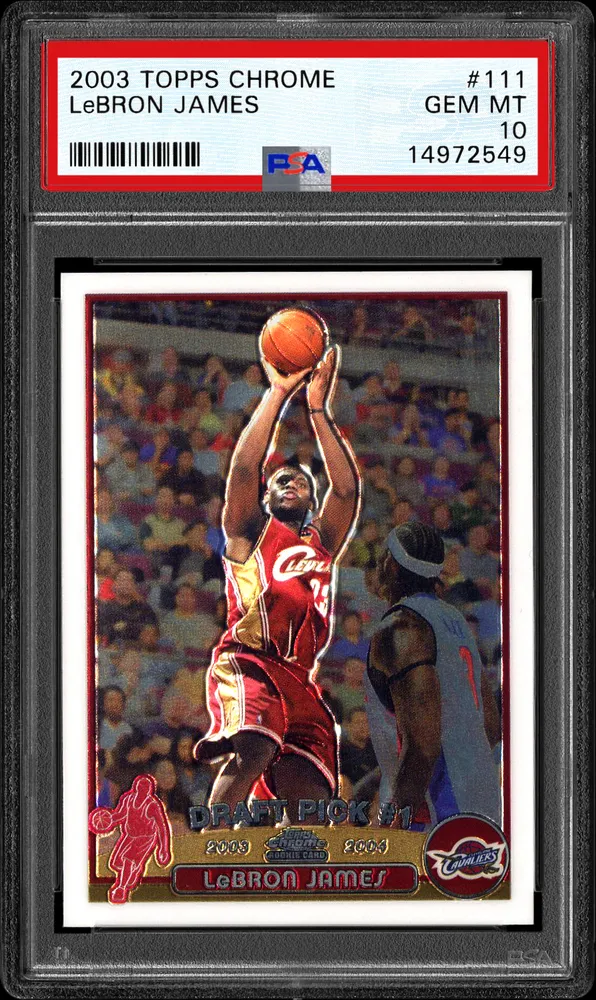
#111 / BaseView details & price history
#57 is a card number, not a jersey number
A card number identifies a card within its set. The featured Jordan is 1986 Fleer #57: #57 is the card number, distinct from the 23 on his uniform.
Match the number and player on the reverse and checklist. Insert numbers can include letters. Searching with year + series + player + card number helps narrow the results.
- Year: 1986
- Series: Fleer
- Player and card number: Michael Jordan #57
Check parallel names and serial numbers separately
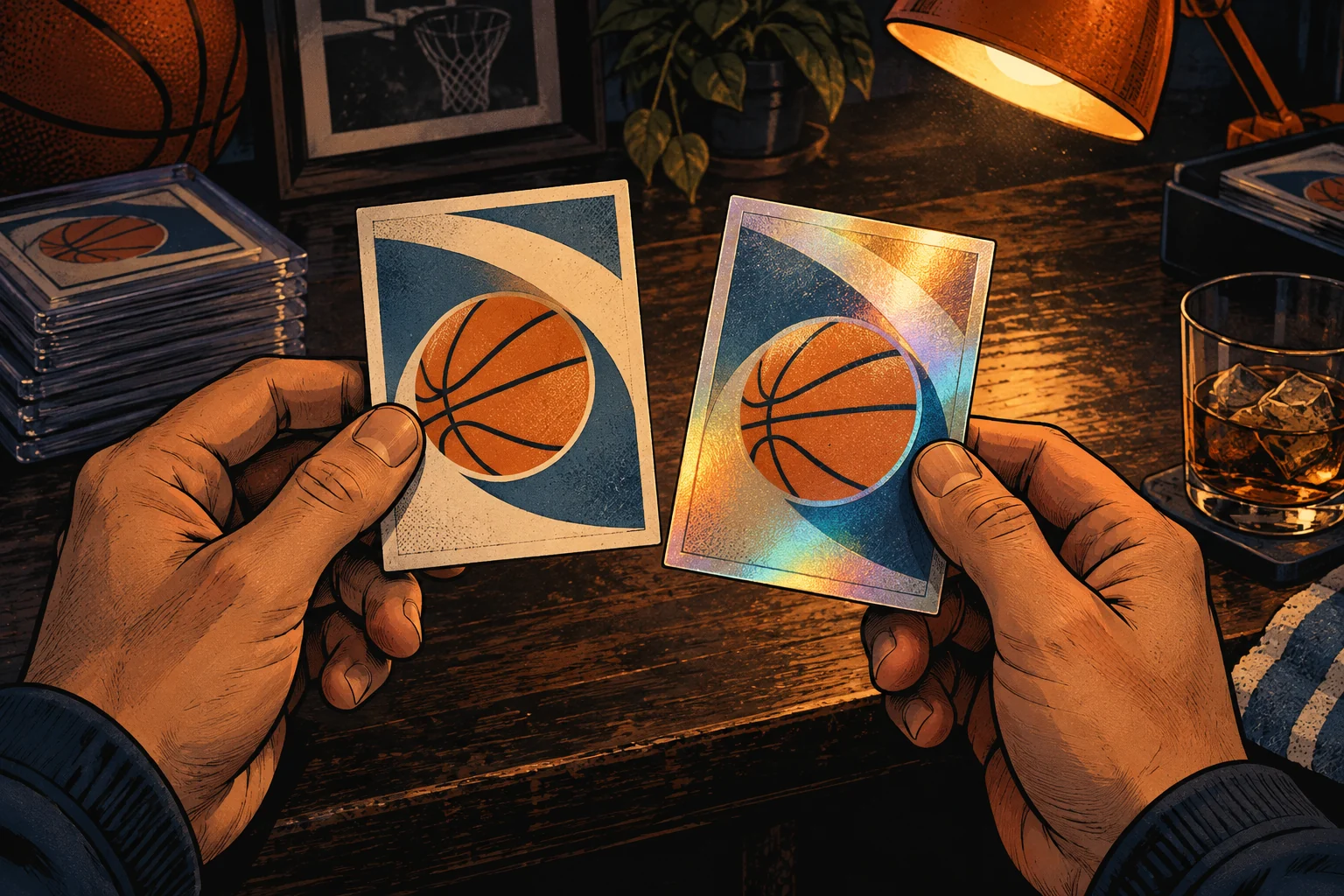
A parallel is a variation with a different color, pattern or finish from the base card. Similar-looking cards may have different official names, so check actual photographs against manufacturer information.
For example, 12/99 indicates specimen number 12 in a serial-numbered variation of 99. It is separate from the card number and does not mean that only 99 cards of that player exist across all products. Some parallels have no serial numbering.
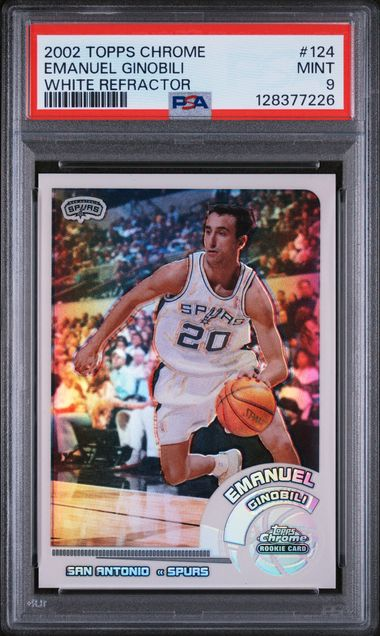
Read the reverse for RCs, autographs and relics
RC is used to indicate a rookie card. Do not stop at the logo; check the product and set in which the card was issued.
Distinguish an autograph signed directly on the card from a signed sticker attached to it. Relics can contain uniform or other material, but whether it was game-used is a separate question. Read the authentication statement on the reverse.
- RC: check its classification in the product and checklist
- Autograph: distinguish on-card from sticker signatures
- Relic: read what the material is and how it was used
Match the grading company, grade and certification

Read the grading company, numerical grade and certification number together. PSA publishes standards covering corners, surfaces, centering and more. Identical numbers from different companies are not automatically equivalent conditions.
A certification lookup confirms the registered information. Finding a number alone does not guarantee that the item being offered is genuine. Compare the label, actual photographs, holder and seller as well.
- Check the grading company and grade
- Match the certification record to the label
- Inspect the actual card photographs, holder condition and seller